
17 September 2026
How Much Does an EV Battery Replacement Cost?
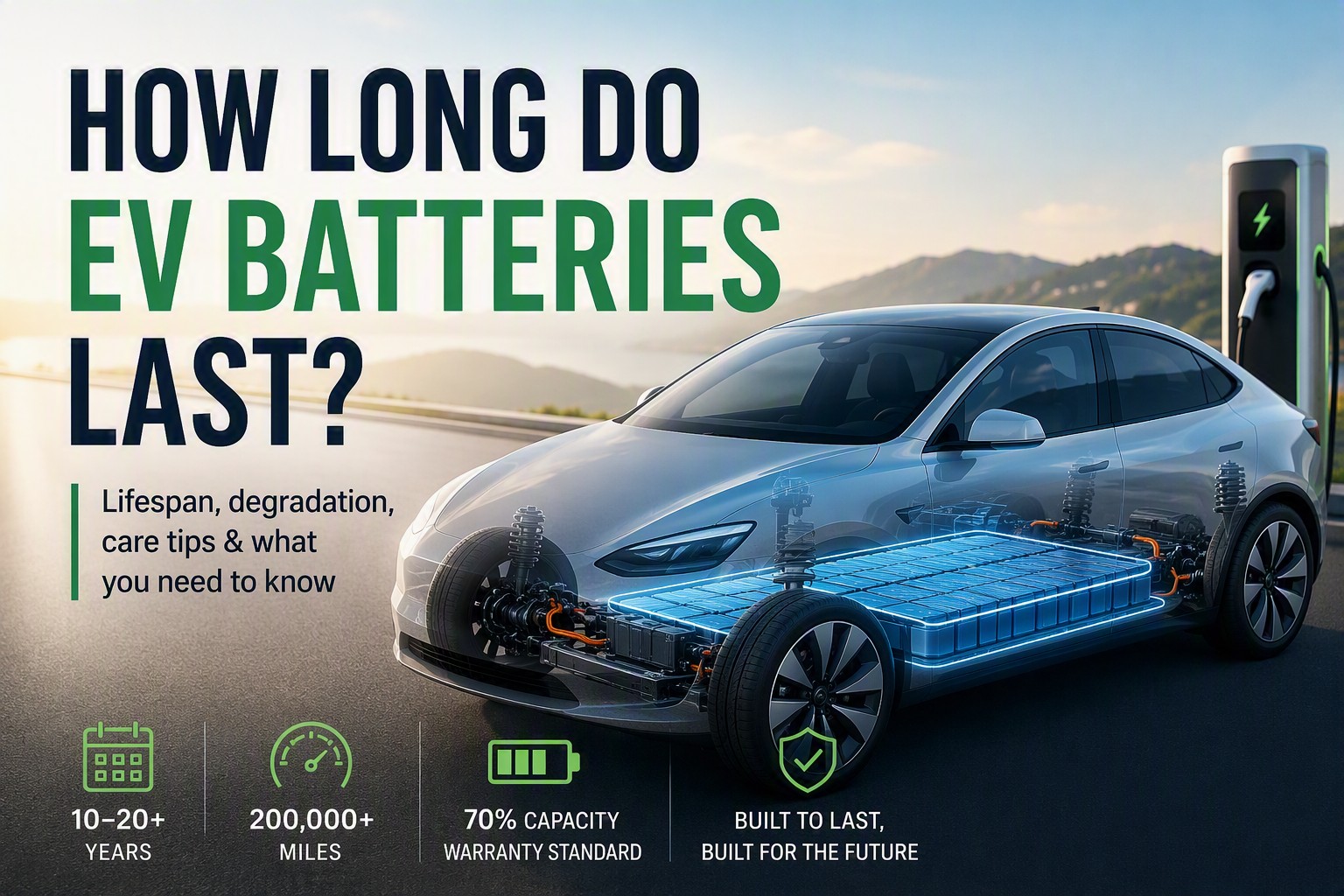
How Long Do EV Batteries Last?
One of the biggest questions people ask before buying an electric vehicle is simple: how long will the battery last? After all, the battery is the most expensive component in an EV and plays a crucial role in determining range, performance, and long-term ownership costs.
The good news is that modern EV batteries are proving to be far more durable than many early critics predicted. Real-world data from millions of electric vehicles on the road suggests that most EV batteries will outlast the average ownership period of the car itself, often remaining healthy for well over a decade. Today, battery longevity is becoming less of a concern and more of a success story for the electric vehicle industry. Most manufacturers back their batteries with warranties of around 8 years or 100,000 miles (160,000 km), typically guaranteeing that battery capacity will not fall below around 70% during that period.
Understanding EV Battery Degradation
Unlike a petrol or diesel engine, an EV battery does not suddenly stop working when it gets old. Instead, it gradually loses capacity over time. This process is known as battery degradation.
Think of your smartphone. After a few years, the battery still works, but it doesn’t hold as much charge as it did when new. EV batteries behave similarly, although they are designed with far more advanced cooling, management systems, and durability in mind.
A new EV with a 300-mile range might deliver:
- 290 miles after a few years
- 275 miles after several more years
- 250 miles or more after a decade
The battery is still perfectly usable; it simply stores slightly less energy than when it left the factory.
How Long Do EV Batteries Typically Last?
Based on current data, most modern EV batteries are expected to last between:
| Lifespan | Typical Outcome |
|---|---|
| 8-10 years | Minimal impact for most drivers |
| 10-15 years | Noticeable but manageable range reduction |
| 15-20 years | Battery may still be usable, often with 70%+ capacity remaining |
| 20+ years | Possible in well-maintained vehicles and moderate climates |
Many experts now believe modern lithium-ion battery packs can exceed 200,000 to 300,000 miles before requiring significant repairs or replacement. Some have already surpassed these figures in taxi fleets and high-mileage commercial operations.
What Causes Battery Degradation?
Several factors influence how quickly an EV battery ages.
1. Charging Habits
Frequent charging to 100% can accelerate degradation over time. Most manufacturers recommend limiting daily charging to around 80% unless maximum range is required.
Likewise, regularly allowing the battery to drop to extremely low levels can increase wear.
The healthiest charging pattern is usually:
- Keep charge between 20% and 80%
- Use 100% only when needed for long journeys
- Avoid leaving the car fully charged for extended periods
2. Fast Charging
Rapid DC charging generates more heat than slower AC charging.
While modern EVs are designed to handle fast charging safely, relying on it exclusively can lead to slightly faster degradation compared with primarily using home charging.
Fortunately, modern battery management systems have made this much less of a concern than it was in earlier EV generations.
3. Climate
Temperature is one of the biggest factors affecting battery longevity.
Battery packs generally prefer moderate temperatures between 15°C and 30°C.
Extreme heat can accelerate chemical ageing, while prolonged freezing conditions can temporarily reduce capacity and charging performance.
This is why many modern EVs include active thermal management systems that cool or warm the battery as needed.
4. Mileage and Age
Time matters just as much as mileage.
Even a lightly driven EV will experience some battery degradation simply because lithium-ion cells age naturally. However, age-related loss is generally gradual and predictable.
What Happens When a Battery Degrades?
Many people imagine an older battery becoming unusable. In reality, the main effect is reduced driving range.
For example:
| Battery Health | Original 300-mile EV |
|---|---|
| 100% | 300 miles |
| 90% | 270 miles |
| 80% | 240 miles |
| 70% | 210 miles |
Even at 70% capacity, many EVs still provide sufficient daily range for typical commuting and family use.
This is one reason manufacturers often choose 70% state of health as the threshold for battery warranty coverage.
How Much Does an EV Battery Replacement Cost?
Battery replacement costs vary enormously depending on vehicle size and battery capacity.
Historically, replacement costs were extremely high, but battery prices have fallen dramatically over the last decade.
Typical replacement costs today may range from:
| Vehicle Type | Approximate Cost |
|---|---|
| Small EV | £5,000-£10,000 |
| Family EV | £8,000-£15,000 |
| Large SUV / Luxury EV | £15,000+ |
However, complete battery replacement is often unnecessary.
Many modern packs are designed in modules, meaning only the faulty section may need repairing rather than replacing the entire battery.
Are EV Battery Failures Common?
The evidence increasingly suggests that catastrophic battery failure is rare.
Most issues occur gradually through normal degradation rather than sudden failure.
The industry-standard battery warranty of 8 years / 100,000 miles exists because manufacturers have confidence that the vast majority of batteries will comfortably exceed these requirements. Many warranties also include a battery health guarantee of approximately 70% capacity retention.
Giving Batteries a Second Life
Another fascinating aspect of EV batteries is that their usable life often extends beyond their automotive career.
Once a battery drops below the level required for practical driving, it can still retain substantial energy-storage capability. Many used EV batteries are being repurposed for:
- Home energy storage
- Solar power systems
- Commercial energy projects
- Grid balancing applications
This second-life usage may add another decade or more of usefulness before recycling becomes necessary.
How to Maximise Battery Life
If you want your EV battery to last as long as possible:
✓ Charge to 80% for daily use
✓ Avoid frequent deep discharges
✓ Use rapid charging only when needed
✓ Park in shaded or covered areas during extreme heat
✓ Keep software updated
✓ Follow manufacturer charging recommendations
✓ Use scheduled charging where available
None of these steps are essential for normal ownership, but they can help slow degradation and preserve range over many years.
The Bottom Line
The fear that EV batteries will quickly wear out is becoming increasingly outdated. Modern battery technology, sophisticated thermal management systems, and improved cell chemistry mean today’s EV batteries are designed to last for many years and hundreds of thousands of miles.
For most drivers, the battery will almost certainly outlast their ownership of the vehicle. Even after a decade of use, many EVs retain well over 80% of their original capacity, providing excellent everyday usability. Combined with lengthy manufacturer warranties and falling replacement costs, battery longevity has become one of the strongest arguments in favour of electric vehicle ownership rather than a weakness.
In short: the average EV battery is likely to last 10 to 20 years, with many expected to remain usable far beyond that, making battery replacement a far less common concern than many first-time buyers imagine.